Credit Cards & Insurance
Life insurance in Pakistan: term vs endowment, which to choose
Life insurance in Pakistan: term cover costs about Rs 4,400 a year per Rs 10 lakh online; an endowment about Rs 57,950. Costs, surrender losses and complaints.
Credit Cards & Insurance · Money
Health insurance in Pakistan: what the Sehat Card covers in each province in 2026, what it skips, and private plans from Rs 2.25 lakh to Rs 10 lakh.
AI Summary
The Sehat Card is free government health insurance for hospital admissions, using your CNIC as the card. Official FAQs from 2025 set Rs 4 lakh a family a year for major treatment; it never covers OPD. Punjab stopped it in public hospitals on 30 June 2025, KP still runs it province-wide, and Islamabad, AJK and GB got it back on 16 January 2026. Private plans from Jubilee, Adamjee, TPL and EFU Life cover Rs 2.25 lakh to Rs 10 lakh a year.
Health insurance in Pakistan comes in two layers. The government Sehat Card pays for hospital admissions for permanent residents of Khyber Pakhtunkhwa, Punjab, Islamabad, AJK and Gilgit-Baltistan, with your CNIC as the card, up to Rs 4 lakh a family a year for major treatment (official FAQs, 2025). It does not pay for OPD (outpatient) visits. Private plans from Jubilee, Adamjee, TPL and EFU Life add Rs 2.25 lakh to Rs 10 lakh of cover a year, as of October 2026.
Share of health spending paid from your own pocket
47%
Pakistan, against 40% in Sri Lanka and 33% in China (SECP, citing WHO data, 6 Aug 2025)
The Sehat Card is cashless: the hospital bills the programme, not you. It pays only when a doctor admits you. The official FAQs say:
The family limits below come from the two programme FAQs we could open, both archived in spring 2025. We couldn’t open a 2026 version of either page, so treat them as the last published figures.
| Programme | Priority care (major treatment) | Secondary care | Extras |
|---|---|---|---|
| Sehat Card Plus (Khyber Pakhtunkhwa), Apr 2025 | Rs 4 lakh a family a year | Rs 2 lakh | More for transplant, cancer, heart disease and ICU; Rs 1,000 after a delivery; Rs 10,000 burial allowance |
| Sehat Sahulat Program (federal), May 2025 | Rs 4 lakh a family a year | Rs 60,000 | More for life-threatening conditions and maternity; cardiac, cancer, dialysis and kidney transplant get extra cover |
The limit refills once a year.
It depends on where your CNIC says you live. The programme has changed in several regions since 2024.
| Region | Status as of October 2026 |
|---|---|
| Khyber Pakhtunkhwa | Running for the whole province, about 10.7 million families. Budget raised from Rs 35 billion in 2025 to Rs 41 billion. |
| Punjab | Ended in government hospitals on 30 June 2025. Continues at private empanelled hospitals. No treatment outside Punjab from 1 July 2025. |
| Islamabad, AJK, Gilgit-Baltistan | Suspended in March 2024 over unpaid dues. Relaunched on 16 January 2026, funded until 30 June 2027. |
| Sindh | Not covered, according to the federal health minister in January 2026. The 2025 federal FAQ listed only Tharparkar district. |
Khyber Pakhtunkhwa. State Life Insurance runs the scheme, with 700 empanelled hospitals, 169 of them in the province. Payment delays have hit hospitals: in March 2026, ProPakistani reported that Ayub Teaching Hospital had received Rs 38 million against Rs 700 million owed. In September 2026 the chief minister reviewed proposals to add basic health units and a top-up package for government employees; in the reports we found, these were still proposals.
Punjab. The Punjab Health Initiative Management Company (PHIMC) closed the scheme in public hospitals on 30 June 2025. A PHIMC official told The News that the scheme carries on in private hospitals. In December 2025, Chief Minister Maryam Nawaz ordered separate cards for cardiac and cancer patients, worth up to Rs 10 lakh each, for 45,000 patients in the first phase, Dawn reported.
Islamabad, AJK and Gilgit-Baltistan. About 70 hospitals were being empanelled at the January 2026 relaunch. Cardholders from these regions can also use 16 designated hospitals in Karachi.
Send your CNIC number by SMS to 8500. In Khyber Pakhtunkhwa you can also use 9780. The federal programme’s helpline is 0800-09009.
If you aren’t showing up, the problem is usually your NADRA family record. In Khyber Pakhtunkhwa, newly married couples and widows or divorced women who register as head of family are added on 1 January and 1 July. A newborn is covered for its first month; after that it needs a Form-B.
Private plans pay hospital bills up to a yearly limit, usually cashless at the insurer’s panel hospitals. They help if you live in Sindh, want a private room, or want cover the Sehat Card no longer gives you in Punjab.
| Insurer and plan | Yearly limit | Who can join | Pre-existing illness | Maternity |
|---|---|---|---|---|
| Jubilee General Family Health Care | Rs 2.5 lakh (semi-private room) or Rs 5 lakh (private room), shared by the family | Adults 18 to 49, renewable to 60; children 1 to 23 | Covered after 4 years | Not stated |
| Adamjee Health Insurance | Rs 2.25 lakh, Rs 3.5 lakh or Rs 5 lakh a family | Up to 60, no medical exam | Not covered | Not covered |
| TPL Women Shield | Rs 3 lakh, Rs 5 lakh or Rs 10 lakh | Women 18 to 55 | Not stated | Listed on the plan page, with OPD and newborn cover |
| EFU Life Mukammal Sehat | Up to Rs 10 lakh, per person or shared | Cover to 80 if you join by 64 | After a waiting period | Included |
| Salaam Takaful Salaam Sehat Regular | Not published | Families | Not stated | Optional add-on |
Limits are from each insurer’s page on 13 October 2026. TPL’s general FAQ says its health plans don’t cover maternity, so check what Women Shield’s policy wording says. Salaam Sehat is takaful, run on Islamic principles. EFU Life is a life insurer; its Mukammal Sehat is a standalone health plan.
We found no published price list at any of the five insurers above. You get a quote after entering ages. Jubilee prices its family plan on the age of the eldest member; TPL says the premium depends on age, the cover and the yearly limit.
There is no tax break either. Section 62A of the Income Tax Ordinance, which gave a tax credit for health insurance premiums, was removed by the Finance Act 2022. For what you pay in tax, see the salary tax calculator.
You can hold two policies. TPL says the second one pays once the first limit runs out.
This is the hardest gap to fill. Adamjee’s plans stop at 60, and Jubilee takes new adults only up to 49. Of the plans we checked, EFU Life’s Mukammal Sehat goes furthest: cover continues to 80 if you join by 64. Buy before your parents reach those ages.
If you want a payout for your family rather than hospital bills, that is life insurance. For cover abroad, see travel insurance.
The Federal Insurance Ombudsman handles disputes between policyholders and insurers, free of cost; you can file online or call 1082. Our car insurance guide covers the 90-day legal limit for paying claims.
More guides: life insurance in Pakistan, travel insurance, pension funds, income tax slabs 2026-27, Credit Cards & Insurance.
Yes. The Sehat Card pays for hospital admissions for permanent residents of Khyber Pakhtunkhwa, Punjab, Islamabad, AJK and Gilgit-Baltistan, and your CNIC is the card. It does not pay for OPD visits.
Send your CNIC number by SMS to 8500. Khyber Pakhtunkhwa residents can also send it to 9780.
The Sehat Card does not. Most private plans pay only for admissions plus tests and medicines in the 30 days around them. TPL's Women Shield is one plan that lists OPD cover.
It is hard after 60. Adamjee covers people up to 60 and Jubilee takes new adults only up to 49. EFU Life's Mukammal Sehat keeps covering you to 80 if you join by 64.
No. The tax credit for health insurance premiums (section 62A of the Income Tax Ordinance) was removed by the Finance Act 2022.
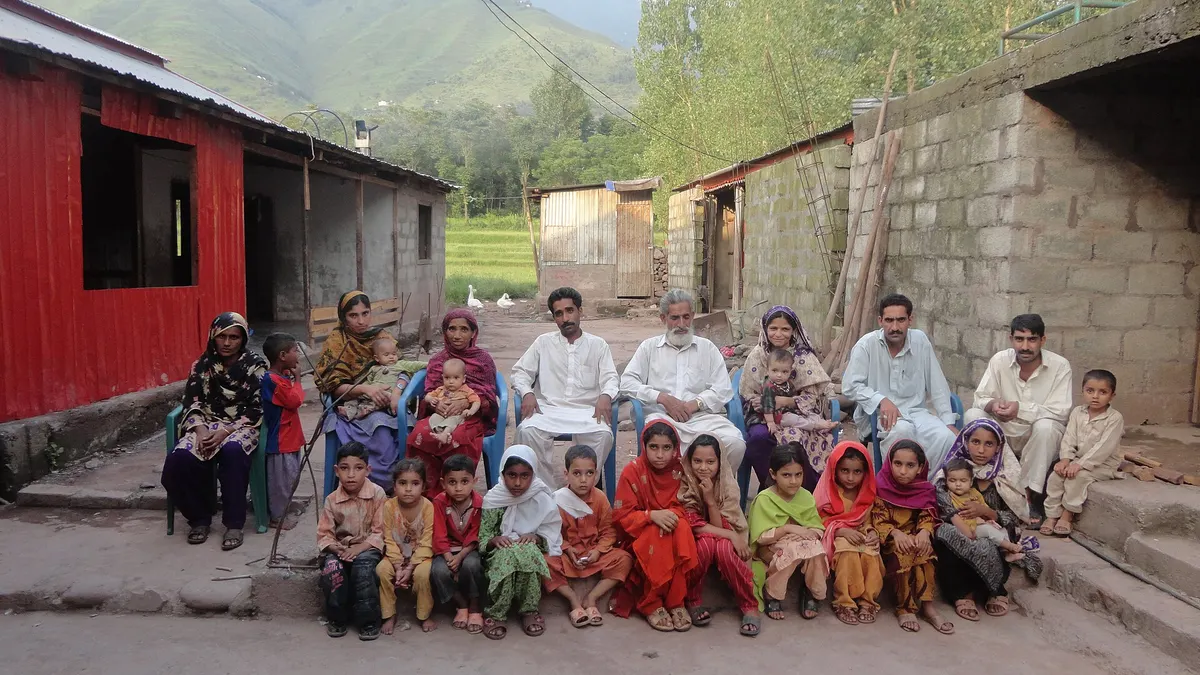
Photo: Faheem Ahmed Chaudhry / Public domain
Credit Cards & Insurance
Life insurance in Pakistan: term cover costs about Rs 4,400 a year per Rs 10 lakh online; an endowment about Rs 57,950. Costs, surrender losses and complaints.
Credit Cards & Insurance
Travel insurance in Pakistan compared: the EUR 30,000 Schengen visa rule, the 25 insurers on embassy lists, published prices and what is excluded.
Credit Cards & Insurance
Best car insurance in Pakistan? 11 insurers and takaful operators compared on PACRA or VIS rating, rate quoted, tracker fee and online buying, Oct 2026.